
The Indo-European Roots Of The Lithuanian Language Explained

Author
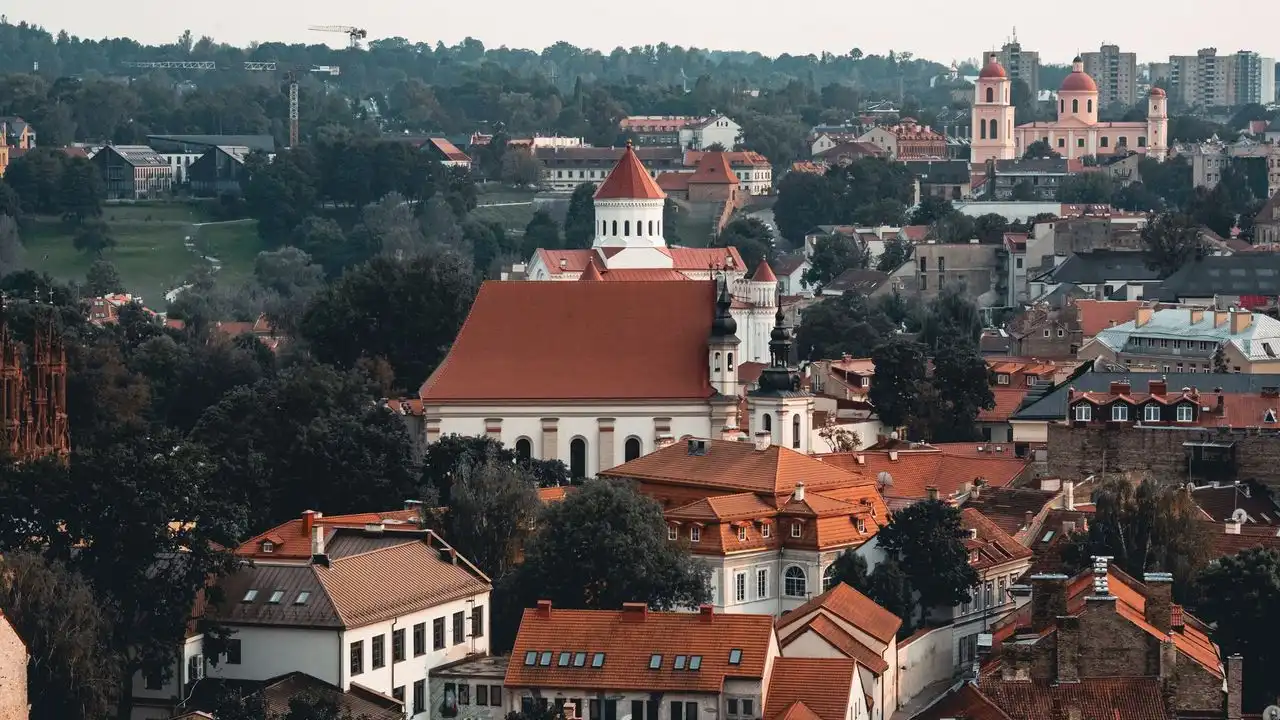
Lithuanian is widely considered the oldest living Indo-European language.
It belongs to the Baltic branch of the massive Indo-European language family.
Linguists study Lithuanian to understand how human beings communicated thousands of years ago.
The language has preserved sounds and grammar rules that most other European languages lost over time.
Table of contents:
The Indo-European language family tree
The Indo-European family includes hundreds of related languages spoken across Europe and Asia.
This massive group includes English, Spanish, Hindi, Russian, and Greek.
All of these languages evolved from a single ancient language called Proto-Indo-European.
Proto-Indo-European was spoken by tribes around 5,000 to 7,000 years ago.
As these tribes migrated, their original language slowly split into different branches.
Lithuanian belongs to the Baltic branch of this family.
Latvian is the only other living language in this specific Baltic branch.
Old Prussian was another Baltic language, but it went extinct several centuries ago.
Why Lithuanian is so important to linguists
Languages constantly change and simplify over time.
English, for example, lost almost all of its complex noun cases centuries ago.
Lithuanian did the exact opposite.
Because Lithuania was geographically isolated by dense forests and swamps, the language evolved incredibly slowly.
It held tightly to the ancient features of Proto-Indo-European.
Modern Lithuanian is closer to the original ancient language than any other living language today.
Linguists often compare it to ancient, dead languages like Latin, Ancient Greek, and Sanskrit.
If a researcher wants to know how Proto-Indo-European sounded, they’ll listen to someone speaking Lithuanian.
Ancient words shared with Sanskrit and Latin
You can clearly see the ancient roots of Lithuanian when you compare its vocabulary to Sanskrit and Latin.
Sanskrit is an ancient classical language from India that’s deeply related to the Indo-European roots.
Many basic, everyday words in Lithuanian look and sound almost identical to their Sanskrit equivalents.
These similarities prove that the languages share a common ancestor.
Here’s a simple table comparing Lithuanian, Sanskrit, and Latin words:
| English | Lithuanian | Sanskrit | Latin |
|---|---|---|---|
| Son | sūnus | sūnus | filius |
| Fire | ugnis | agnis | ignis |
| Night | naktis | naktis | nox |
| Wheel | ratas | rathas | rota |
Notice how the Lithuanian words for “son” and “night” are completely identical to the ancient Sanskrit words.
These aren’t borrowed words.
They’re original words passed down directly from the earliest Indo-European speakers.
Preserved grammar and pronunciation
Vocabulary is only one part of the Indo-European puzzle.
Lithuanian also preserved the highly complex grammar structure of its ancestors.
Proto-Indo-European used a system of noun cases to show a word’s role in a sentence.
Modern Lithuanian still uses seven distinct noun cases today.
The endings of words change depending on whether the word is a subject, object, or location.
Lithuanian also retained archaic dual forms, which are used when talking about exactly two things.
Most other Indo-European languages dropped the dual form completely in favor of simple plurals.
Furthermore, Lithuanian pronunciation features an ancient pitch-accent system.
The tone and stress placed on a specific syllable can completely change the meaning of a word.
This musical pitch system was present in Proto-Indo-European, but it’s vanished from most modern languages.
Lithuanian is a living museum of human language history.
It offers a direct window into our ancient Indo-European past.
Studying Lithuanian gives you a unique connection to the voices of our ancestors.